A Charming Adventure Rough Around the Edges and Ages – The Adventures of Elliot: The Millennium Tales Review
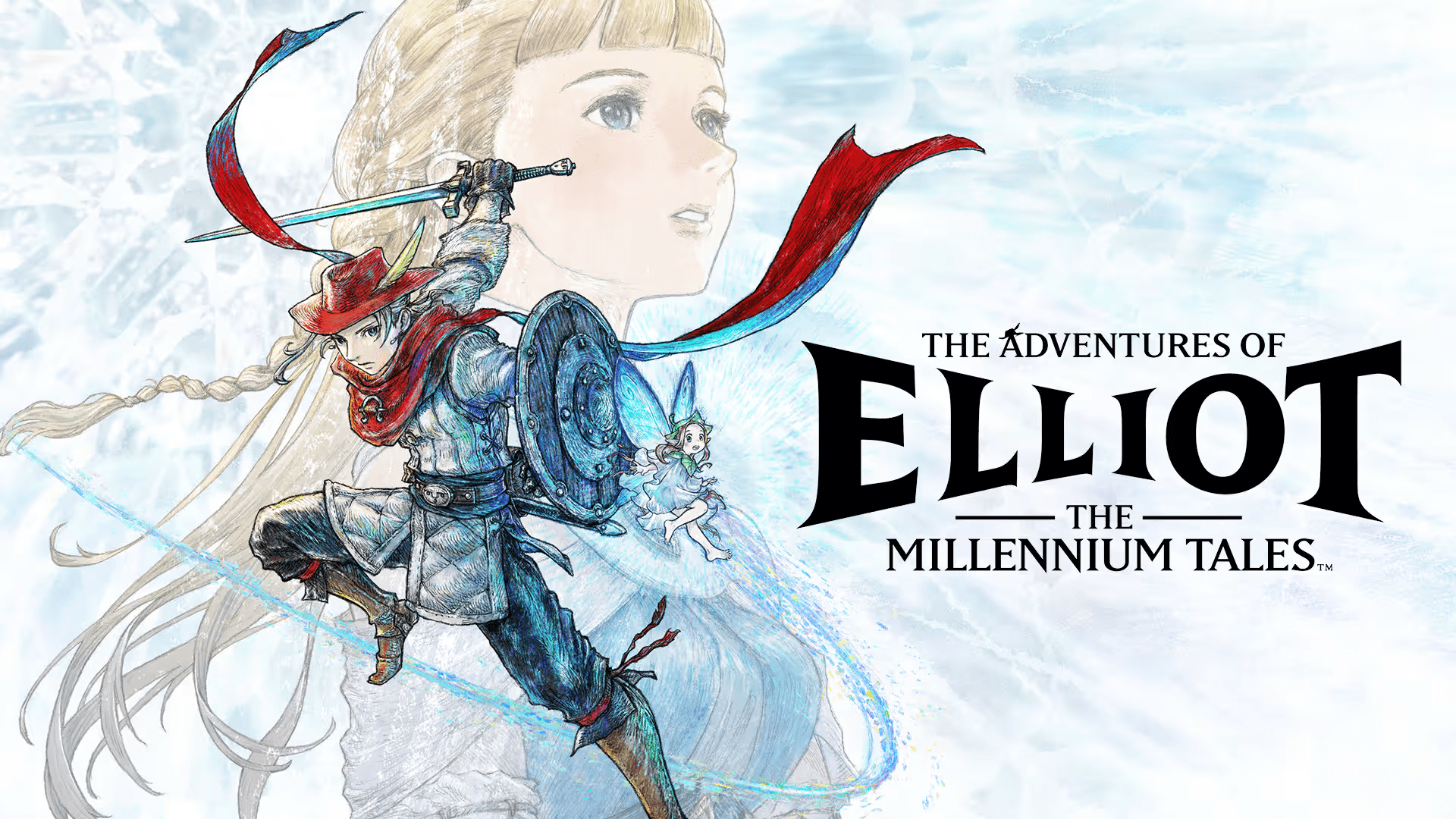
The Adventures of Elliot is the newest IP from Team Asano starring Elliot and his fairy Faie. Together they travel across not only the world but through various time periods on an adventure to save the world. Think of it like an action adventure version of Chrono Trigger, though maybe it’s not quite as epic as that game. It features the same 2D-HD artstyle with crisp character sprites and detailed backgrounds seen in recent Square Enix titles such as Dragon Quest 1-3 HD-2D Remake and Octopath Traveler 0. From what I’ve played there were no references to characters or stories in other Square Enix games. It’s an extremely accessible game even to someone new to playing video games, having many difficulty options as well as an option to revive your character on the spot with in-game currency as many times as you want, provided you’re not on the highest difficulty. The game has a strong narrative, but still remains very lighthearted throughout with easy collectibles and simple dungeon exploration.
If I had to summarize it Adventures of Elliot feels like a passion project and I really like the game’s narrative and themes. Although it doesn’t quite nail being a perfect game it does feature a vibrant world and a great cast of characters. It would be interesting if they released a manga or anime adaptation of this series because that form of media would really tell this game’s story better.
I’ll provide a quick synopsis of the first hour of the story without giving any spoilers past that. You play as Elliot who is an adventurer in the world of Philabieldia. To be honest, I didn’t like the name of the world either but thankfully the game doesn’t mention it too much. It takes place more specifically in the Kingdom of Huther which is a much better fantasy name. Elliot was an orphan who was found under a tree by another adventurer. This inspired him to also become an adventurer and dedicate his life towards helping others. As an adventurer he does many jobs such as finding medicine from ingredients outside the kingdom as well as saving explorers who were searching mysterious ruins. We often see Elliot giving back to the community such as through helping out at the orphanage where he was raised.
Elliot works for King Hichard and although the plot starts off with simple errands it becomes a save the world story very quickly, with Elliot exploring portals leading to many different time periods. After a few hours into the game Elliot finds Faie the Fairy as a traveling companion. Again, Faie the Fairy is a little on the nose for a name like Dragon Ball Super’s Hit the Hitman, but it’s short and simple so it’s serviceable. Philabieldia though is a name I could never get behind. Faie reveals to Elliot that she lost her memories and she isn’t able to be seen or heard by any other characters so Elliot hopes to find something to help Faie while on his journey.
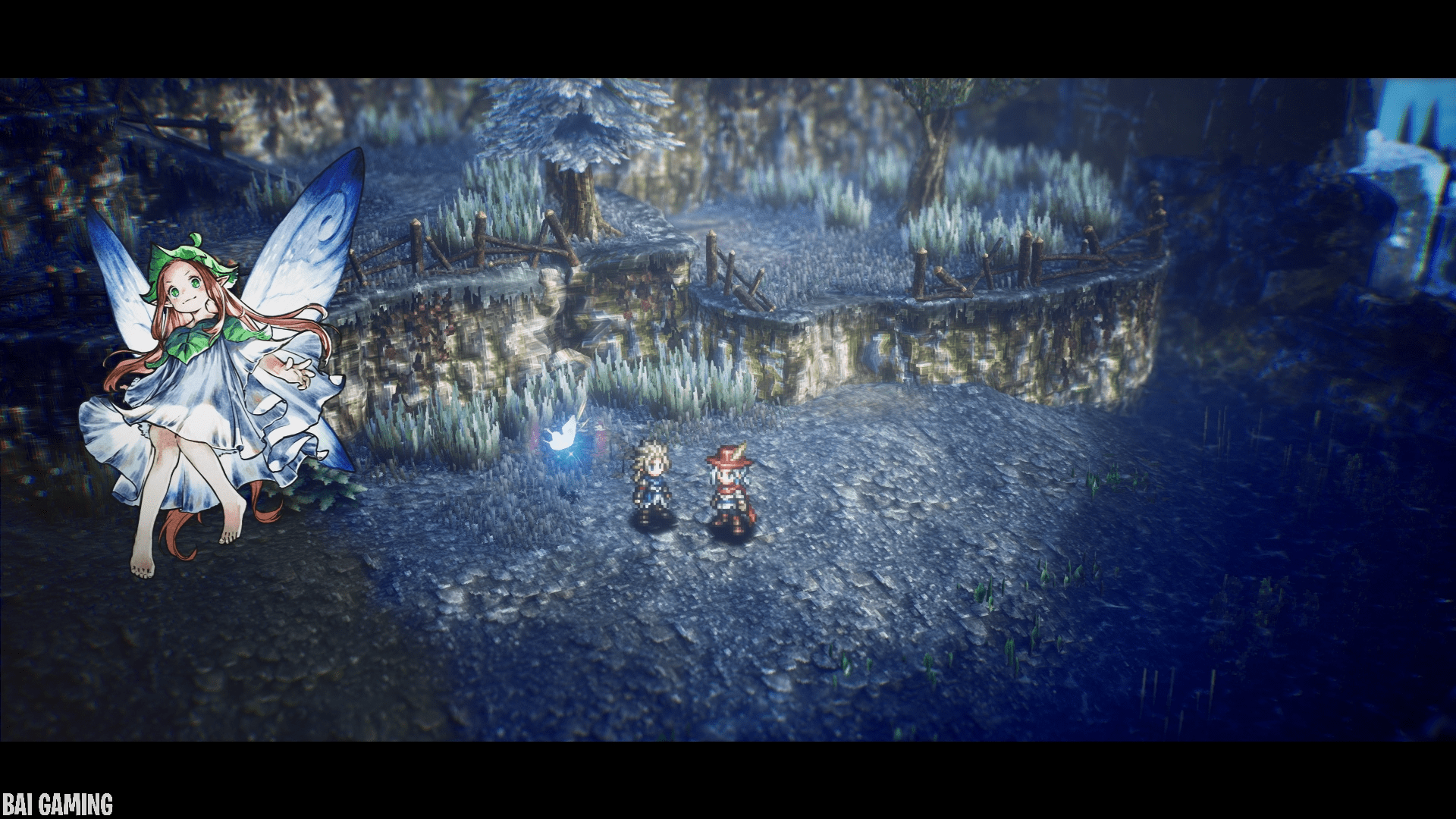
The gameplay is a mixture of The Legend of Zelda: A Link to the Past and the older Ys games such as Ys VI: The Ark of Napishtim. In other words, the game has all its characters and enemies represented by sprites moving over a world you explore. It’s not a 2D top-down game, you still explore 3D backgrounds using a 2D sprite.
Although jumping over gaps was strange at first with a 2D sprite due to depth perception it grew on me quickly and the platformer elements were never hard at all. I grew up on Xenogears and disliked that game for having 2D sprites in a 3D environment, but Adventures of Elliot never had annoying platforming. The bottomless pits in this game will just take away some health and respawn you instantly nearby. Some dungeons made really great use of verticality in the game design, with certain pits actually making you fall down a floor instead of removing health. There were no random pitfalls like old Wizardry games thankfully, it’s usually an obvious hole that stands out that will take you to the floor below. If you see a suspicious treasure chest you can’t reach and you go up a floor, chances are you’ll need to drop down to get to it.
Most platforming challenges had very reasonably spaced gaps and you never have to climb big towers since the dungeons and caves were all pretty small in scale, even main story dungeons. There are a myriad of ways to mitigate the platforming too such as an accessory that lets you hover in the air if you hold the jump button, similar to Yoshi’s flutter jump but without the loss of momentum. It’s cheap and available within the first hour of the game.
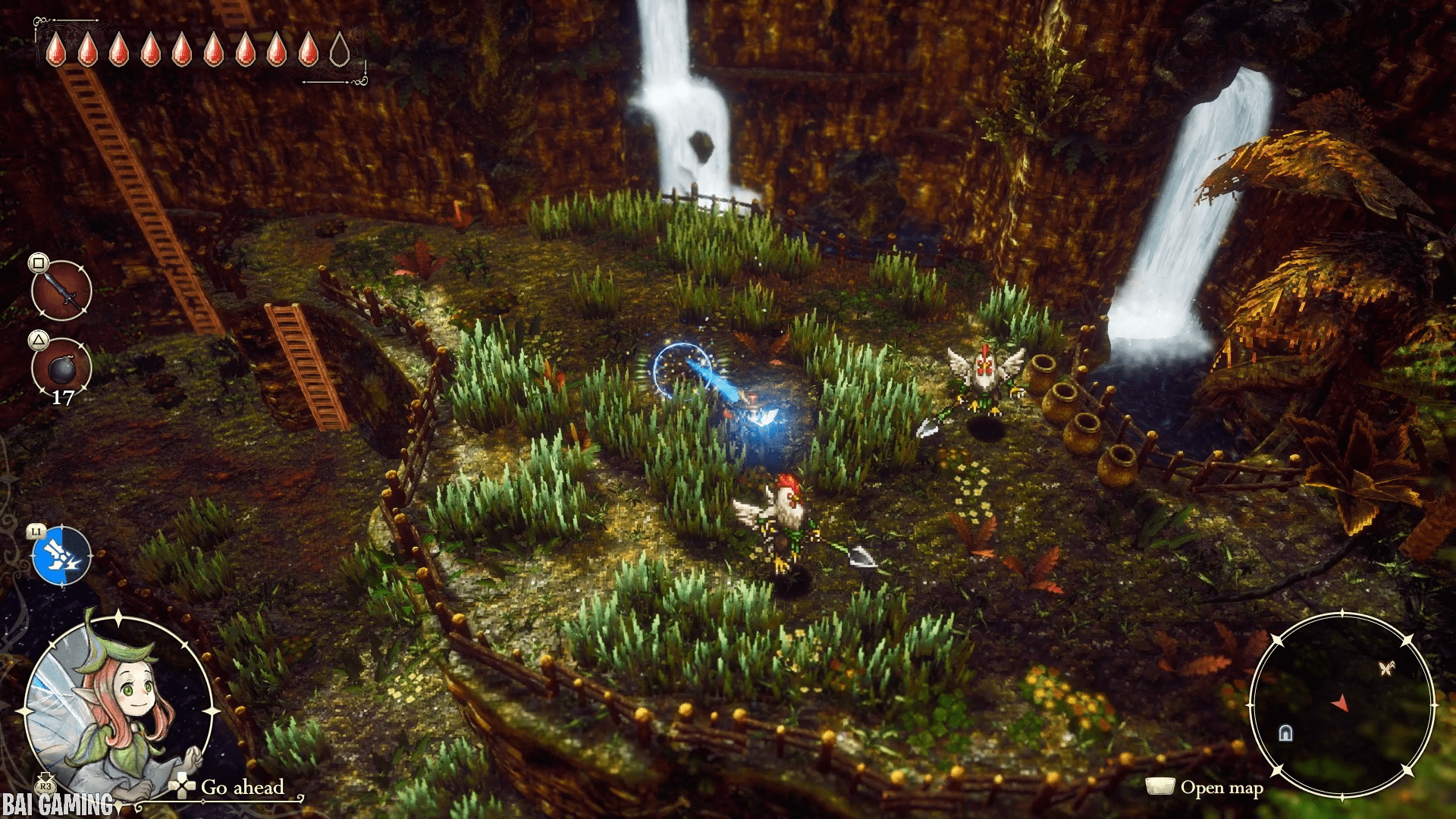
The combat is action based meaning you have full control of your character. Elliot can attack, move out of the way from enemy attacks, and defend with a shield through blocking or parrying at the correct time. Since there are no random encounters, you don’t even have to fight any battles unless it’s a forced encounter or a story boss. In those kinds of situations you’ll be locked in, so you should prepare in advance if you see a room that looks like it’ll have a boss fight. The game has save points that can be used as warps but the game autosaves fairly often as well. These points are scattered frequently throughout the world map, at dungeon entrances, and typically before the boss of a dungeon. With the exception of very few story points you can warp back and forth at any time. The high number of save points is really great if you can’t play for extended sessions and is great for accessibility.
Some of the tools Elliot uses include bows, bombs, healing vials, a hammer and more, all of which also have upgrades that are slowly drip-fed as the player progresses through the game. You always have two slots to use assigned to two buttons on your controller but you can quick-swap to any weapon at any time and you can change your accessories on the fly as well. The enemies generally had very fair attack patterns and they were easy to move out of the way from. I phrased that in a very particular way because I couldn’t find a dedicated dodge button so I would actually run to the side to avoid enemy attacks.
Although you get infinite heals at the beginning of the game after going through the first time period you’ll have to use health vials for the rest of the game. Considering how easy the game is this is very fair. You get vials as if they were key items from certain side quests and sometimes story progression. You can choose to fill the vials with liquid to restore your health or to apply buffs. As you progress the game there will be more kinds of potions to fill your vials with, which are needed since the lesser health vials only heal a small amount of health. The higher tier of potions cost more but I never found currency to be a problem. Chances are you won’t tank many hits, and even if you do sidequests, story progression and even enemy drops provide more than sufficient money to keep your health topped up, or restock your arrows or bombs if you prefer offense rather than defense.
The enemies had clearly telegraphed attacks too that made blocking and parrying pretty simple. You get a fairy ability that lets Elliot sprint so you can use that to run out of the way from enemy attacks too, it works well though it isn’t a dodge so to speak. I found the parry timing to be very generous, and there’s even an accessory you can obtain about midway through the game that increases the parry window significantly, making it trivial to dodge if you’re daunted by the game.
There are two currencies dropped by enemies and found as rewards: tul and magicite fragments. Tul is just money to spend in shops to replenish your consumable items or buy new accessories. Magicite fragments are used to roll for magicite crystals, passives you equip to your weapons to make them stronger such as having a higher critical hit. It’s random what effects you get using magicite and although I usually hate gacha-like mechanics in games (I’m looking at you Xenoblade Chronicles 2) I found the game easy enough to not really mind having sub-optimal builds. You can find good magicite passives as rewards while exploring and I found myself rolling in magicite crystals by the endgame. You can get creative with builds but I found myself just stacking as many critical boosting passives as I could, leading to most of my attacks being critical hits.
Faie obtains many abilities to use throughout the game and she is controlled using the right analog stick and L1. She has abilities such as fire, sprint, vacuum, warp duplication, and more. There are multiple radial quick-swap menus that allow you to change your weapons, fairy abilities and more such as using healing items. I found it really fun experimenting with all of Faie’s abilities. If Elliot becomes frozen from an ice attack for instance, you can use Faie’s fire move to unfreeze him instead of waiting for the ice to thaw. Instead of just running to avoid an enemy attack you can use Faie’s sprint or even warp ability. You can also move Faie while she’s using fire into the enemies to deal more damage or to distract them.
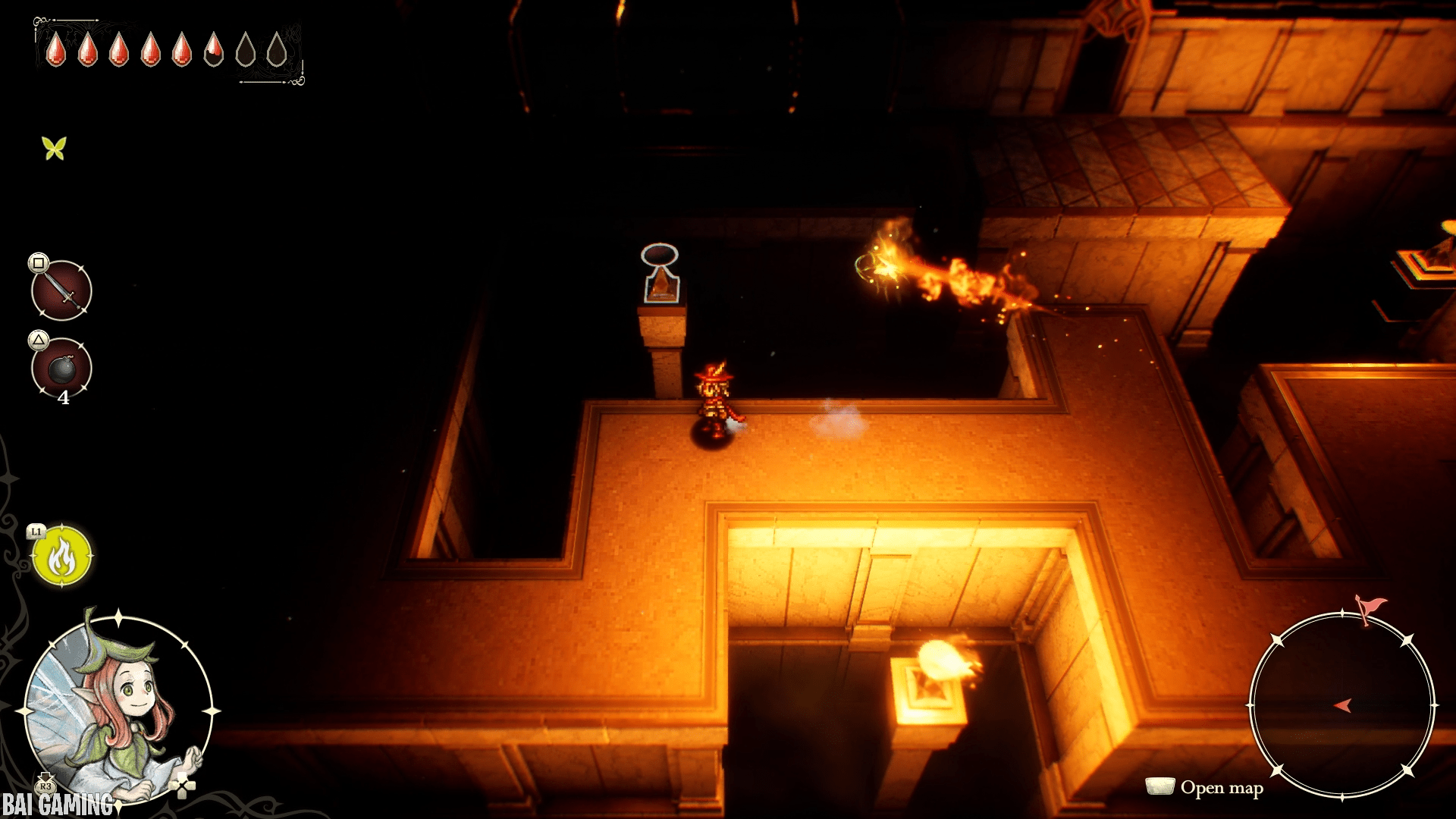
There are puzzles to solve, sidequests to do, and many optional ruins to explore. All of these contain bonuses such as upgrading your item capacity and upgrading your health in quarters at a time, with four quarter shards of life adding an extra heart. This title uses shards of life and not hearts, but you can easily see the inspiration the developers had from The Legend of Zelda games especially looking at the bombs, health vials, and arrows too.
I understand that certain genres do have rules of how certain game mechanics have to work, but I would’ve preferred if Elliot had more of its own kind of tools. It doesn’t have to be so heavily inspired by The Legend of Zelda with the quarter health, bombs, and arrows. Sure many games have these too but all of these put together really makes it obvious it’s inspired by The Legend of Zelda and it really makes it seem like the developers of The Adventures of Elliot played it way too safe. I understand these are all mainstays and pillars of the genre but I really wanted at least a few unique tools.
The big difference between The Adventures of Elliot and the old top-down The Legend of Zelda games is that this title has many accessibility options and modern quality of life game design decisions which I really liked. Although the difficulty can be changed with a variety of different options, I found that the hardest difficulty would have you game over within a single hit or two, and the lower difficulties would be too easy. Although it’s a common complaint I really would prefer if developers could make games more difficult without bloating the enemies’ health and increasing enemy damage output. I understand that in certain video game genres this can be tricky but the extra effort would’ve been greatly appreciated.
Elliot can be contrasted against with Mina the Hollower, a game I would also recommend that is inspired by top-down Zelda but is far more challenging, with many collectibles that are incredibly challenging to find. Elliot is just too easy, often in a way that makes it bland. You don’t have to scour the world in Elliot because most collectibles are shoved in your face. I would’ve prefer is at least some collectibles were harder to find.
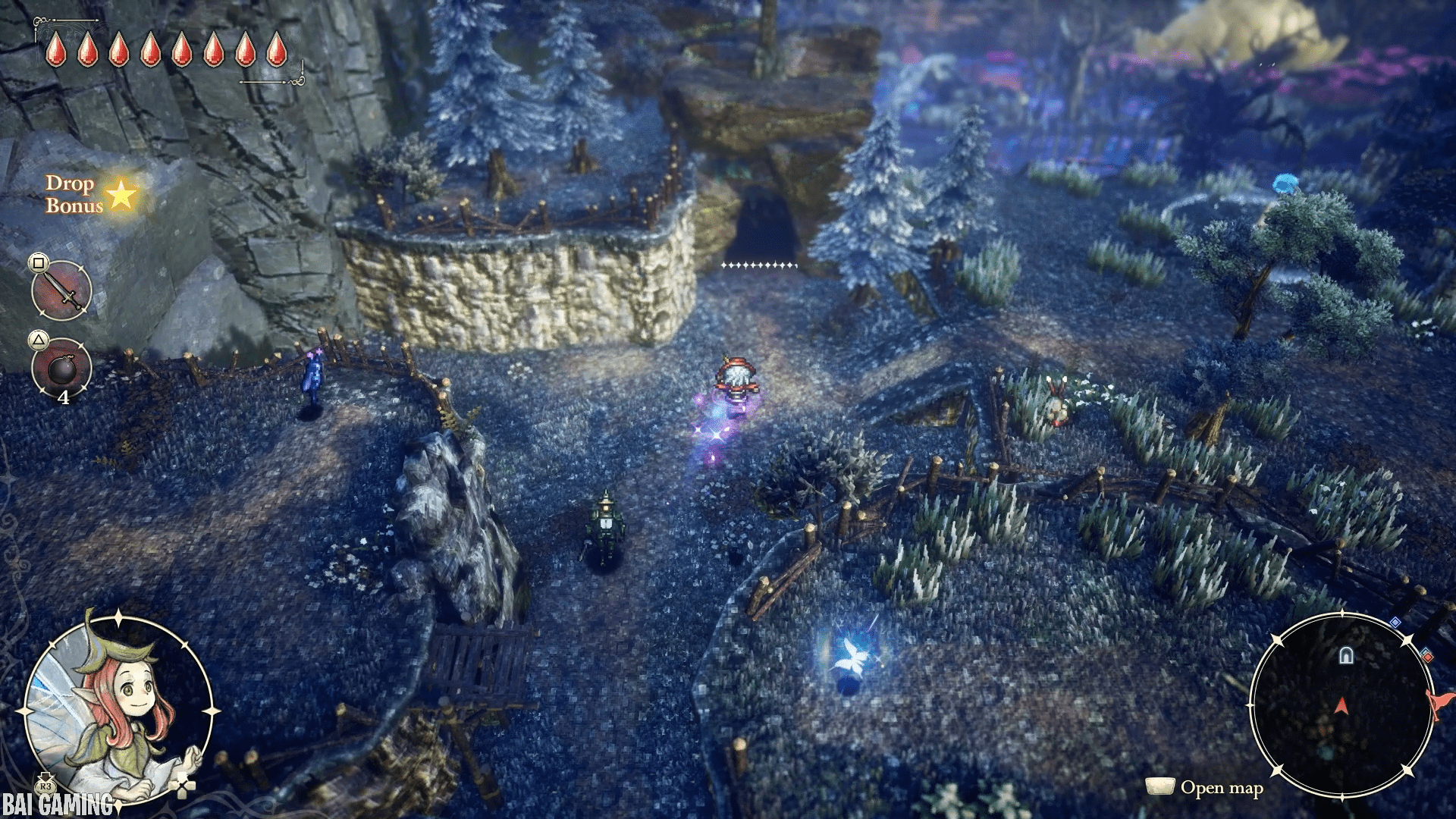
I really like how the sidequests glow green on the mini-map to differentiate it from regular NPC dialog and the game also warns you if you’re going to miss them due to progressing the story too far. Some sidequest deadlines are a little tight due to how the story progresses but I really appreciate the game providing warnings. That is an example of a good quality of life improvement. On the other hand, the enemy variety and enemy attacks are very lackluster such as the constant chicken and beastmen enemies. Some end-game bosses are challenging and fun to fight, but speaking broadly most enemies and mini-bosses are pretty bland.
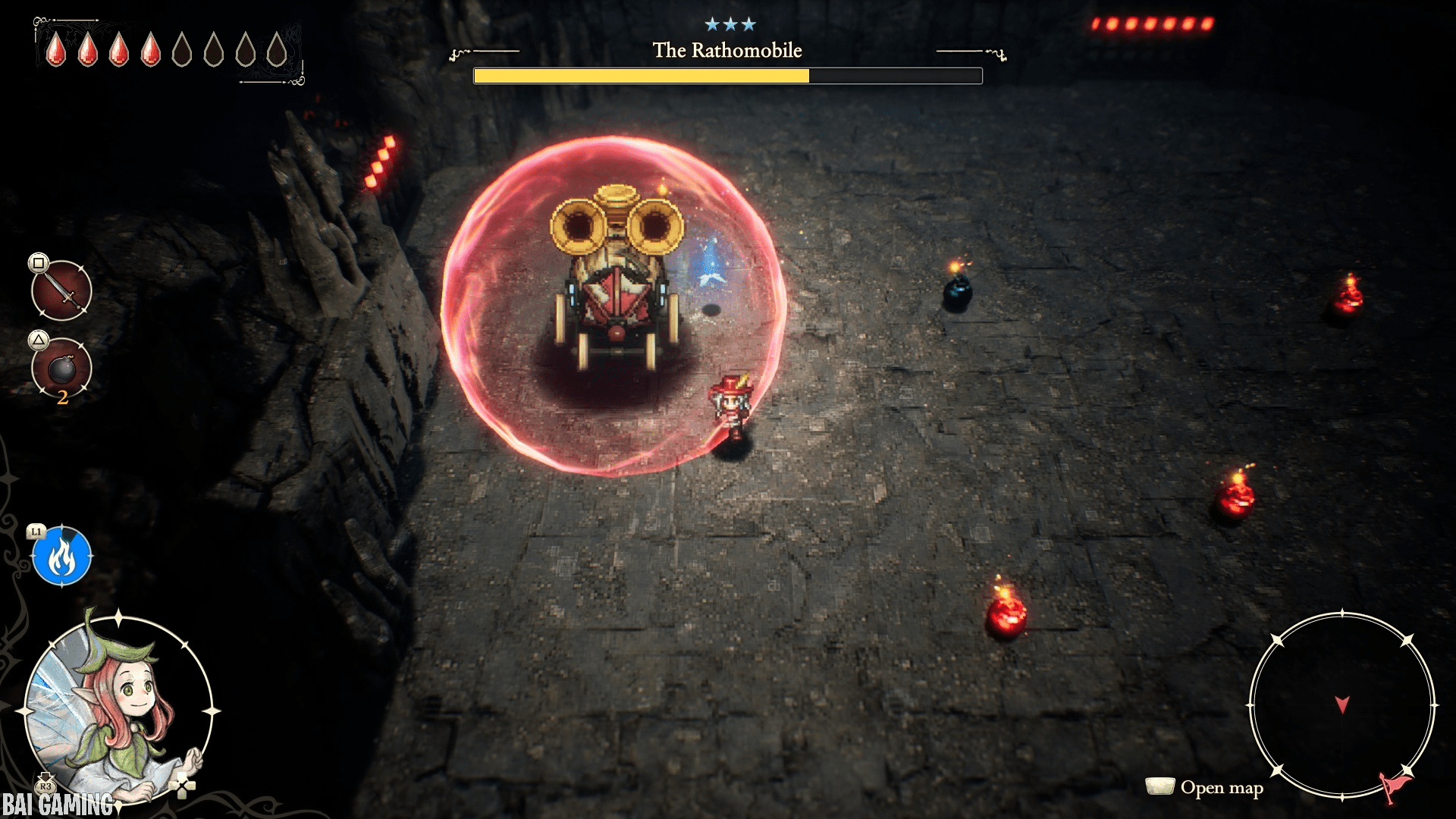
The collectibles in this title are also not exciting to find. I like how detailed and intuitive the world map is but it feels like so many collectibles are thrown in your face. There are big temples that award shard of life pieces but they all seem very short and easy as well as combat arena temples that provide more accessory slots. I understand they can’t make it too hard to find or complete because the developers need to ensure everyone can have character progression to beat the game, but it often feels too easy at times to the point of becoming boring. I rarely found myself in awe.
There are also temples that award Faie with new fairy abilities to use, but they’re really more of a tutorial for a new power you’ll obtain. The puzzles aren’t really that good, when you find a new dungeon on the world map it’s really whether you have the tool or fairy ability to use or not. Sometimes you can sequence break certain sections but I don’t think it was intended by the developers. The puzzles are generally just bombing a cracked wall, lighting up unlit pedestals with Faie’s fire ability, pushing stones onto a button, aiming lasers correctly, or pressing a button that opens a timed gate and using Faie’s running ability to sprint past the gate in time. I don’t think these kinds of puzzles set Adventures of Elliot apart from any other contemporary JRPG.
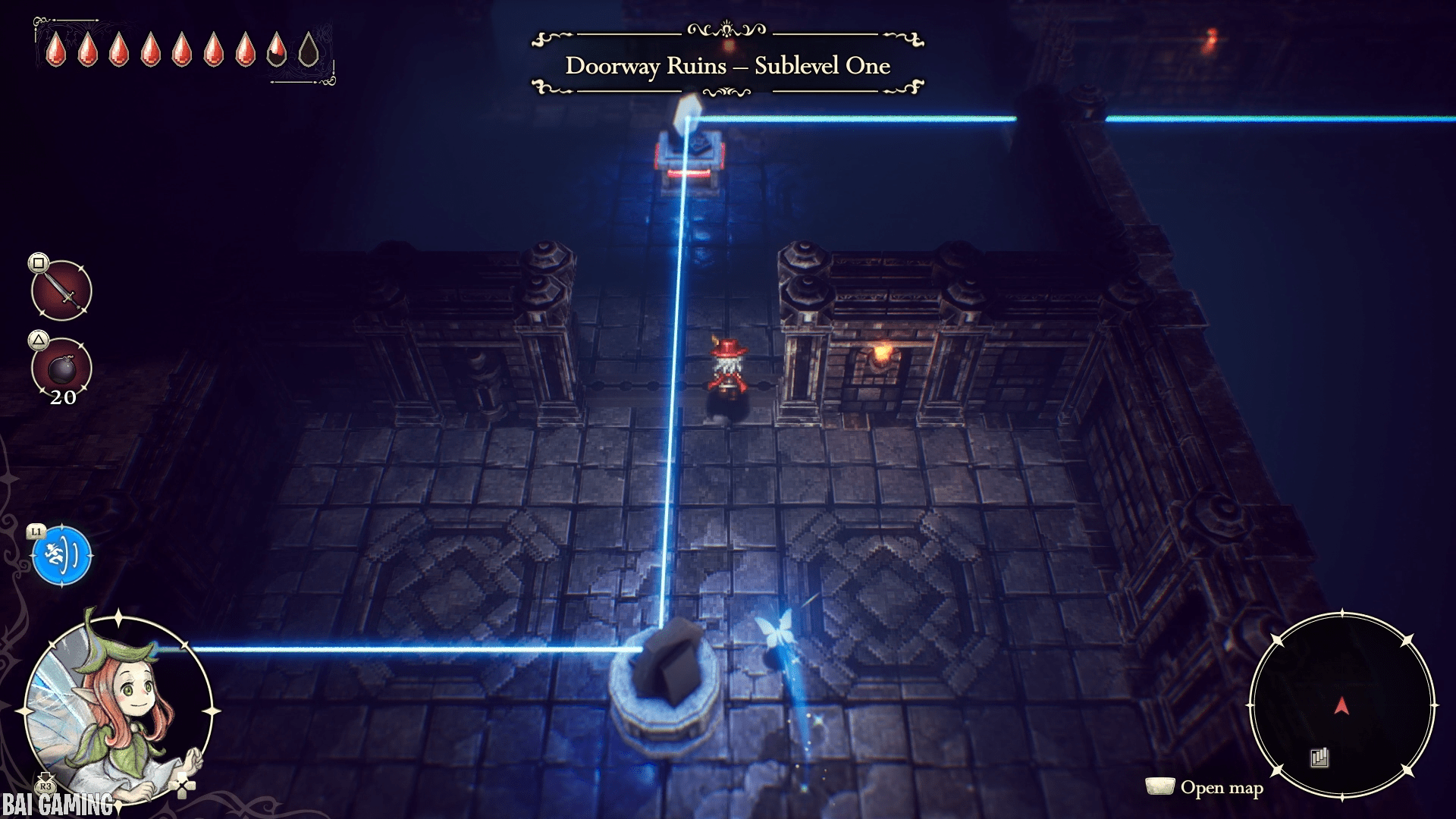
It’s not to say I don’t enjoy a game that’s on the easy side where I can relax and turn off my brain, but I’d really like it if there was a game that had difficulty and puzzles somewhere between Adventures of Elliot and Mina the Hollower. I was hoping for more complex dungeons, at least closer towards the end, but instead the endgame dungeon seemed like more of a victory lap where you just follow a straightforward path.
Many dungeons require the player to find keys in treasure chests to open locked doors just like you see in many of The Legend of Zelda games. Yet I found this game to be less complex than that. Even the most complex dungeon in this game had only 2 keys and 2 locked doors and it was linear, meaning the player would put the blue key into the blue lock, and then find a red key for a red lock therein. I never saw a situation where you’d get 1 blue key to unlock one of 3 blue locked doors and within that door you’d find more keys. If the developers didn’t want to make the dungeons at least a little more complex then the developers should’ve just made the dungeons without the locks and keys, and instead just make the dungeons like Ys where you explore, solve puzzles, do platforming, fight enemies and find treasure.
Faie the Fairy will also give you the solutions to the puzzles with dialog as soon as you encounter the puzzle. I understand that these games are developed with a younger audience in mind, but I would rather have the companion at least wait before telling me the solution. It’s the same problem as in God of War Ragnarök where Atreus gives the solution away immediately without even giving the player 10 seconds solve the puzzle. You can turn down the frequency of how much she talks in the game’s options so the issue can be mitigated. Still, I believe there could’ve been a more elegant solution, such as having another button that would be dedicated for asking Faie for help instead whenever you want.
Faie is always present in all the cutscenes in the bottom left corner of the screen after you find her. She reacts with many different emotions and has a one or two liner after every scene in the game. Faie is a child-like fairy, so I can understand how she can be grating at times but I generally didn’t mind her behavior. In fact she was often hilarious at times. The dialog I really dislike from her is the tutorial dialog because she’s holds the player’s hand far too much. On the other hand, her comments regarding the game’s lore was fun and insightful.
I really liked the sidequests in this game. All sidequests are fully voiced and most of them feature major supporting characters in the game. The sidequests aren’t too intensive, they usually tell you to gather an item or defeat an enemy or even just talk to a character. I really liked these in a narrative sense because they added a lot of extra scenes with the supporting characters. Although I didn’t actually like fulfilling the sidequests themselves since it was just gathering items and defeating enemies, I really liked watching the sidequest stories unfold. The sidequests really compliment the main scenario of the game as well and they feature many twists. I don’t want to reveal spoilers and I’ll simplify it. One sidequest has Elliot learn about a villain’s sister who cared for him and it added significant backstory to the villain. Another sidequest has Elliot work for a villain, leading to Elliot refusing to fulfill the request because he didn’t want to do an atrocity the villain suddenly sprung on him.
These sidequests all show Elliot’s character and have the theme of living together in peace with all kinds of people. I really do like the message that the game is going for, it’s similar to Metaphor ReFantazio’s message or even That Time I Got Reincarnated as a Slime. The sidequests take place over many different time periods in the past you can warp to and the most interesting part is that doing a sidequest will change the current time period. So if Elliot helped someone construct a building in the past, it turns out their descendants will end up being a major construction firm in Elliot’s present time. It changes the dialog of the NPCs and it was a nice attention to detail. I really like the quest screen where it shows NPC sprites on a board that fills out linearly so you can tell if you missed a quest or not. It’s really unique and I like seeing the NPC sprites instead of just scrolling through a list of quest names in a menu, but I won’t show it to avoid spoilers.
The game does have its downsides too. Although I really like the message the game is going for, the game as a whole plays it extremely safe. Elliot is always very positive and doesn’t really have a character arc. The game itself doesn’t take much risk either, the premise of the game is just Elliot accepting orders from the King and exploring the lands borrowing many gameplay mechanics from The Legend of Zelda and Ys.
I was really hoping for more conflict and risks taken in this game. Elliot always feels like a boring protagonist who is always good. I still think the developers could’ve added more conflict to play into this and make it work. I really liked the scene (in an optional sidequest surprisingly) where Elliot refuses to fulfill a request for someone because it went against his morals. It was a very welcome surprise because Elliot drew his sword and the villain actually walked away unlike what you’d expect in most games. Although Elliot was still being preachy and nice there was actually some conflict! Imagine if the plot had more conflicts and complexity, such as if Elliot had only 1 shipment of medicine and had to choose only one town to give it to or if Elliot had to negotiate with a villain to get medicine to save someone important to him. It doesn’t have to be obvious like that but if there was just some way that Elliot was at odds with his morals or if we could see Elliot have at least some form of character development it would’ve really benefited the game.
The plot has awkward pacing all over the place and it takes a while to get going. There’s a midpoint that’s phenomenal, but right after that the game loses steam and becomes aimless. There are many really amazing twists but they’re mostly regulated to right before the ending of the game and require you to get the true ending. The game barely has missable content and you can get the true ending by just reloading your save with everything kept and exploring the world more to solve the mystery which is great. It’s not like an old JRPG from the 90s where you need to restart a playthrough, it’s a modern game. Even so, I still really dislike how back-loaded the plot is and I wonder how many people are going to just get a bad ending and put the game down.
The lack of post-game annoys me because it’d be nice if there was just one extra dungeon or something where I could use all the tools and fairy abilities in a challenging environment. In a way this game’s true ending feels like a post-game but structured into the main scenario.
The most unique mechanic of Adventures of Elliot is the time travel mechanic. Once you progress the story enough you can warp back and forth between different time periods. To me it sounded like a perfect formula, I mean we all enjoyed Chrono Trigger after all. The problem is that there’s a significant amount of asset reuse for the different time periods. Don’t get me wrong, all developers reuse their assets whether it’s art or animation, and it’s a smart technique I generally never have a problem with.
In this title, however, the asset re-use was not done tactfully at all. Elliot’s regular time period is called the Age of Safety, and after a few hours into the game he unlocks access to the Age of Reconstruction, a time period in the past where humanity struggled to fend off beastmen attacks. The Age of Reconstruction isn’t a happy kingdom like where Elliot is from. Instead, it shows everyone with tattered clothing, no crops, barely any food, few medical supplies, the walls are practically crumbling and people are getting into fights with each other regularly. Although all characters in this time period are new the city is just the same kingdom recycled to be a worn-down castle instead. For instance, the roads have the same structure and it’s really obvious.
This problem extends further too because the entire world is reused for this different time period. In other words both timelines have the exact same world map and dungeons just coated in a different paint, almost like different seasons rather than being a different time period. There are variations such as some dungeon parts being blocked off with debris and some dungeons not existing at all in certain time periods. The best analogy is that it’s like how Dragon Age 2 recycled dungeons. They copied a base dungeon design and then closed off or added more tunnels to make different dungeons in a minimal way. Ideally I would’ve liked having unique dungeons for all the time periods, but I can understand that can be difficult for the developers to achieve too.
To make matters even worse there are four time periods in the game. Meaning it’s not just twice, it’s four times the developers recycled the same city, and world map, even down to the dungeons. You unlock the fourth time period rather late in the game, so I explored the world map almost completely for the other three time periods. Then as soon as I unlocked the fourth time period and saw the same world map again I groaned because I knew I’d have to explore the same map and dungeons all over again all at once. I felt that this kind of asset reuse was a major misstep from the developers.
All time periods have the same city in the bottom-right corner of the world map and that’s where 99% of the NPCs are located. The NPCs are wholly unique for each time period and a great amount of care is put into the core cast of characters for the varying time periods but I really would’ve liked if maybe the NPCs had different settlements for different time periods, not just the same kingdom. For a game focused on adventuring I asked myself why wasn’t there other smaller cities?
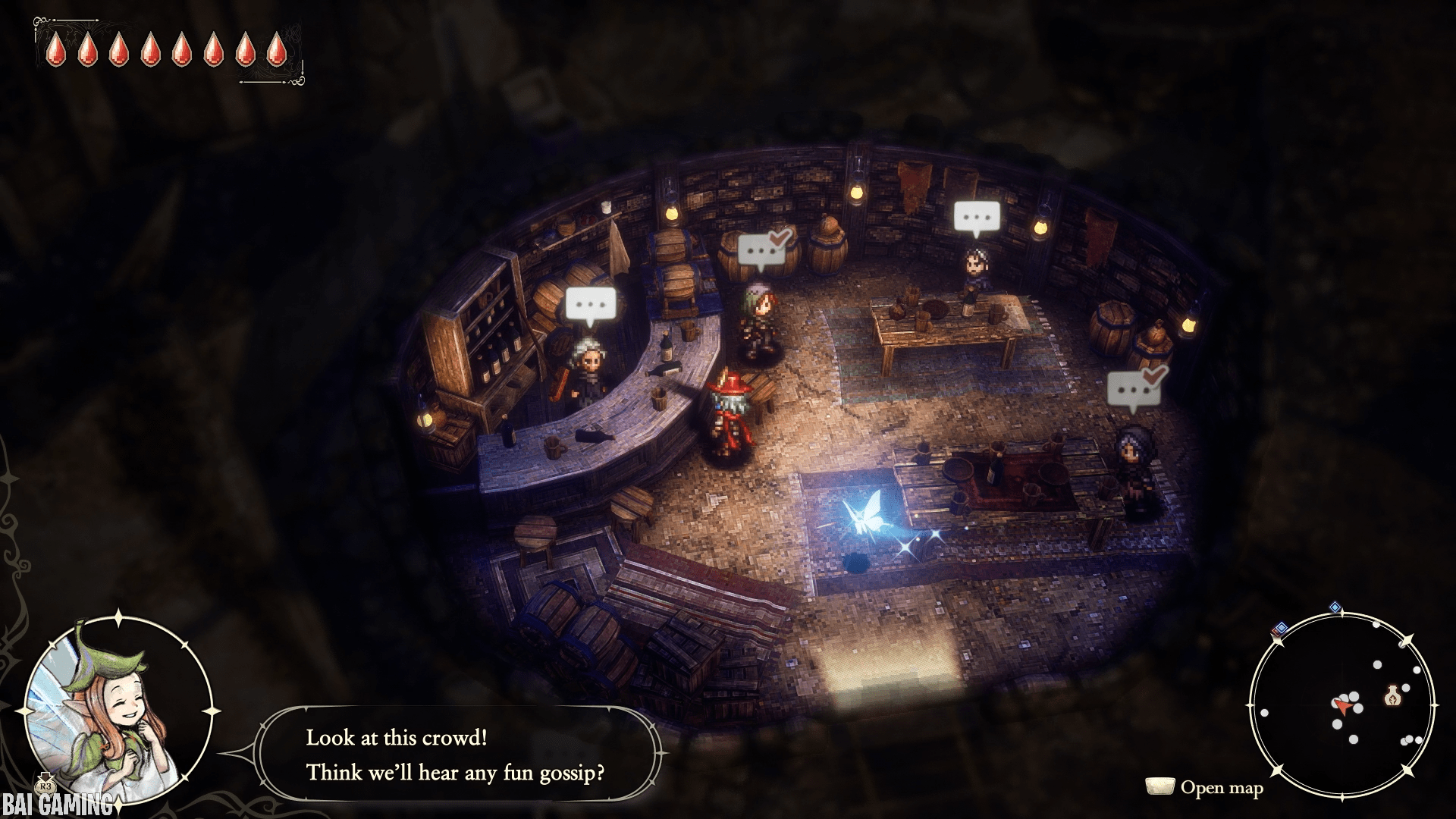
There are no other towns in the game aside from the main settlement in the four time periods and barely any NPCs are found randomly on the world map. The way the game is structured makes it repetitive and feels antithetical to the spirit of adventuring. I understand that from the developers point of view this appeared to be a smart idea since they could add more content if they recycled the world map and dungeons, but I really believe that the developers should’ve instead focused on a fewer number of time periods with wholly new content in those time periods instead. One idea is the developers could’ve focused on two time periods and made the world map substantially different such as Pangaea compared to the continents nowadays.
To explain the issue more clearly, let’s say that there’s a dungeon that exists in all four time periods. The game developers made the dungeon shorter in three of the time periods by closing off existing tunnels, and gave you the full dungeon in only one of the time periods. Faie will even comment that you hit a dead end and that there’s probably more to explore if you warp to a different time period. Even if it’s only a warp away it gets very repetitive warping to all the different time periods just to explore the one dungeon completely and this phenomena happens with almost all dungeons in the game. I really think the developers should’ve just made a higher quantity of shorter dungeons to spread throughout all the varying time periods instead such as how Octopath Traveler 0 did it. No matter how you cut it most people aren’t going to like exploring a dungeon four times to obtain all the collectibles, especially in an action adventure game like this where character progression is tied so inextricably to collecting items around the world.
Aside from poor structure of the time periods the graphics, both character sprites and backgrounds look great and the sound track is phenomenal. I complained previously that the earlier HD-2D games had way too many special effects that strained my eyes and made it hard to see what was on the screen. Thankfully all the special effects have been toned down and the game looks beautiful while still having fiery volcanoes and bitterly cold tundras.
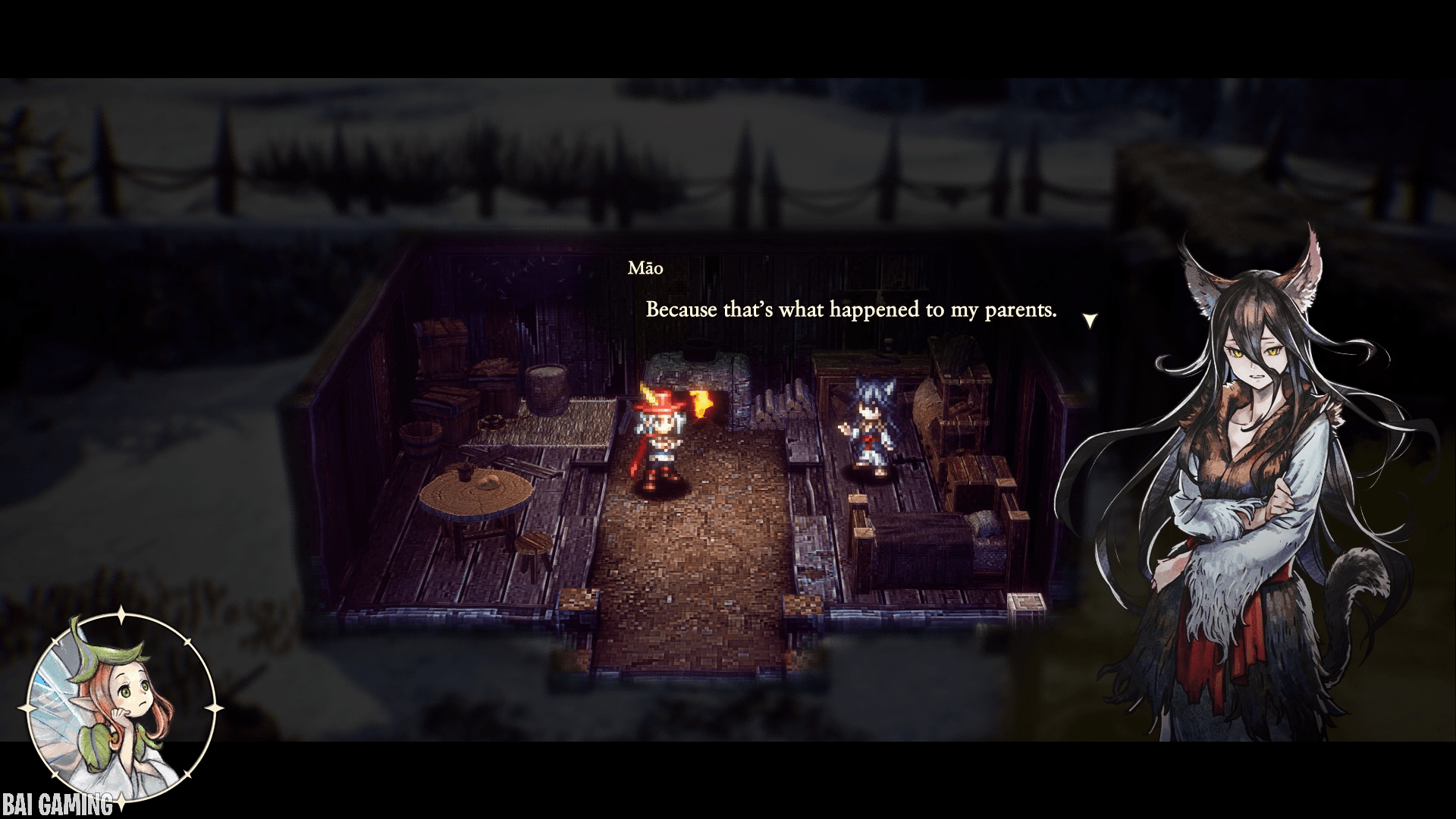
I really liked all of the character portraits that were on the screen while the character talked. It’s only done for major characters but you’ll see it quite often not just in the main story but you’ll see it in many of the sidequests as well. Some of the characters with fewer appearances sometimes looked a bit stiff in their pose but most characters are drawn extremely well, with many very expressive poses for the major characters. The voice acting in both Japanese and English are top notch. One small nitpick is that the dialog does feel a tad long-winded at times especially at the introduction and I truly believe the writers could’ve removed a lot of unnecessary dialog in the main story and gotten the message across.
The Adventures of Elliot is a flawed game but I really enjoyed playing it and I resonated with its story. It’s very accessible and if you want a relaxing time you should check it out. It’s not grindy at all and you’ll never have to look up a guide for collectibles because of how easy it is. The only somewhat noticeable flaw is all the asset reuse in the world map, cities and dungeon. Even so, the world map was amazing to explore the first time. I really enjoyed all the secret passages as well as the variety of biomes including dense forests, dry deserts, wintry tundras and lava caves. It took me about 25 hours to complete the game to the true ending with the majority of its collectibles acquired.
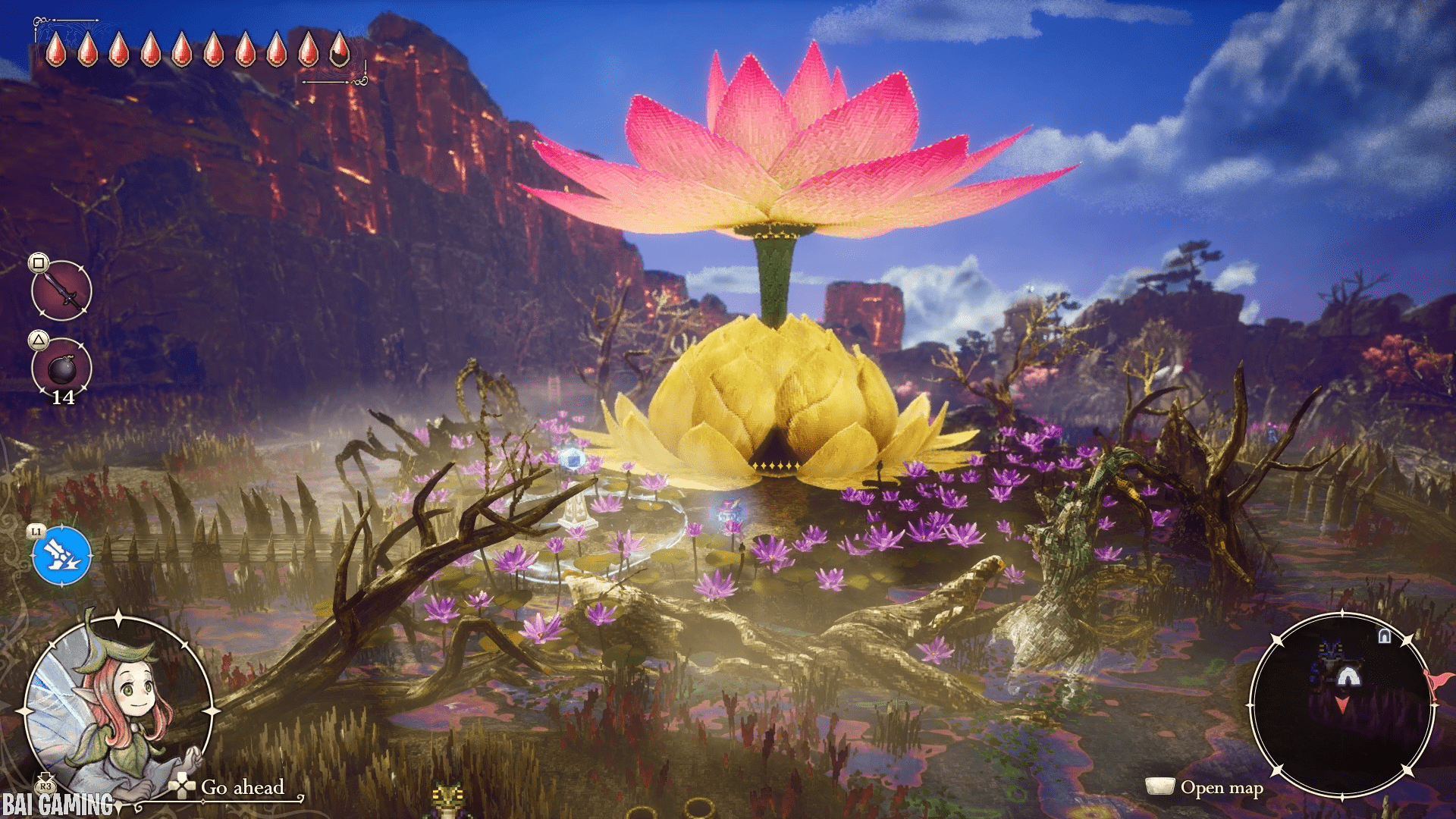
The dungeons have solid level design and flow naturally. Though a bit simple, you’ll never get lost. It’s just that re-exploring these regions in different time periods really got on my nerves towards the end. Aside from that the gameplay is very simple but addicting. I liked finding trials to upgrade my life shards and although there could’ve been more enemy variety it was fun to whack enemies with my sword and use magicite to upgrade my weapons. It was really rewarding randomly stumbling upon weapon upgrades in dungeons too. The start has odd pacing especially in the beginning, but if you stick with it to the end (and I mean the true end) you will find a many interesting twists and a really heartfelt story that is very unique even among its contemporaries.
The Adventures of Elliot: The Millennium Tales Review
 Our Score:
 Great
Pros
- Great HD-2D character sprites, artwork and voice acting.
- Combat is simple but very addicting. Upgrade system is fun, where you combine different passive effects.
- Fun world map to explore and many great dungeons full of collectibles.
- The game holds your hand a lot and the puzzles really don’t make you think at all.
- Excessive re-use of assets such as in the cities, world map, and dungeons. They’re fun to explore the first time, but become very repetitive on your 2nd, 3rd, and 4th visit.
- Story pacing is very slow at times especially the beginning. There is payoff but it’s all back-loaded
– Brandon Harris
Reviewed on the PC (Steam)
Recent Posts